How a Synthetic Professional Roofer Examines Weather-Related Roofing System Dangers
Weather does not harm every roofing system the same way. Two homes can remain on the same street, take the exact same storm, and come away with really various results. That distinction typically comes down to layout, installation quality, drainage, exposure, and product option. A seasoned artificial roofer finds out to read those variables quickly, due to the fact that climate risk is rarely almost what occurred last evening. It is also about what has actually been constructing for years.
That is especially real with artificial roofings. Property owners typically choose them for sturdiness, look, and lower maintenance compared to natural slate or cedar. Those are genuine benefits, but no roof material is immune to bad presumptions. A steep roofing with excellent flashing information and a well-installed artificial system can handle severe weather much better than a costs product laid over bad decking or coupled with weak attic room air flow. A roofing is a system, not simply a shingle.
In locations with wide seasonal swings, that distinction matters even more. An artificial roofing contractor Chicagoland homeowners trust needs to think over one's head kind of tornado. In the same year, a roofing may face driving rain, hail storm, rapid freeze-thaw cycles, ponding at low-slope transitions, ice damming at the eaves, and summertime warmth that evaluates growth and ventilation. Reviewing weather-related roofing system risks means examining how the whole setting up carries out under duplicated stress, not merely searching for noticeable missing pieces.
Why synthetic roof covering transforms the assessment mindset
Architectural artificial roof covering is commonly chosen because it simulates slate, shake, or tile while minimizing dead lots on the framework. That lighter weight can be a major advantage, specifically during an artificial roof replacement on an older home where architectural adjustments would certainly be expensive. However lighter weight additionally transforms just how wind, fastening patterns, and side describing should be assessed.
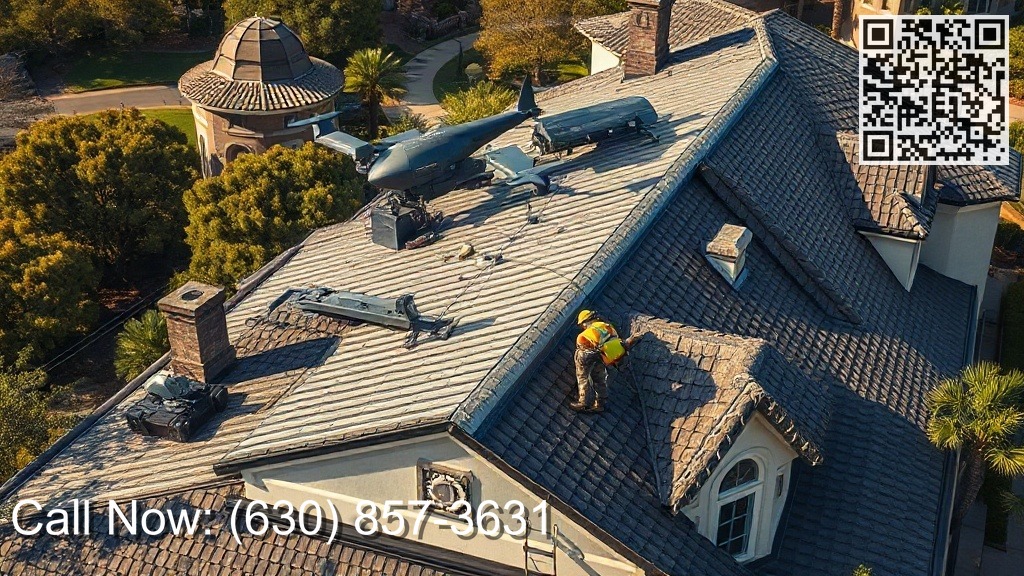
A specialist evaluating all-natural slate looks for split rock, slid items, failing copper, and load-related sagging. A contractor examining artificial roof covering roof shingles checks out those same critical transitions, however additionally pays very close attention to just how the product bends, exactly how it was secured, whether it has actually begun to crinkle or lift at the leading side, and how repetitive thermal movement may be impacting penetrations and flashings.
Premium artificial roof products tend to do well when installed to specification, but the expression "to requirements" carries a great deal of weight. Supplier details for starter courses, ridge vent integration, valley treatment, fastener positioning, and underlayment compatibility are not fine print. They are the distinction between a roofing system that shakes off a hard weather season and one that begins leaking in refined, costly ways.
The first point a skilled service provider studies is exposure
Before climbing a ladder, a good inspector invests a few minutes on the ground. Direct exposure tells a story. A home on an open lot without tree cover will certainly take much more direct wind https://emilianoobxp747.almoheet-travel.com/just-how-an-artificial-professional-roofer-aids-protect-against-early-roofing-system-failure and UV direct exposure than a house protected by bordering structures. A home at the end of a lengthy bring, such as the side of a class backing to open up prairie, commonly sees higher gust stress at edges and ridges. In the Chicago location, that matters. Wind does not need to get to headline-grabbing rates to check a roof covering's weakest details.
Orientation matters too. South- and west-facing slopes normally mature faster because they take extra straight sun and harsher mid-day heat. North-facing inclines may hold moisture much longer, which can urge algae development, freeze-thaw tension, and persistent wetness around debris pockets. When an artificial roofing firm assesses threat, those slope-by-slope distinctions aid forecast where failure is most likely to show up first.
The roofline additionally forms direct exposure. Dormers, converging gables, dead valleys, long rakes, and multi-level changes all create turbulence and drainage concentration. Artificial roof covering for high-end homes usually includes intricate geometry, and complexity raises both visual worth and weather threat. The more intricate the layout, the more important the details become.
Hail is hardly ever a simple yes-or-no diagnosis
Homeowners typically inquire about hail first, specifically after a storm. Understandably so. Hail storm damages audios uncomplicated, yet it often is not. On artificial roofings, impact reaction relies on the item formulation, the size and thickness of the hail storm, roof incline, ambient temperature, and whether the roof currently had underlying vulnerabilities.
Some effects leave apparent visual marks, such as scuffs, crushed sides, punctures, or fractured tabs. Others create less remarkable signs, like small deformation around fasteners, stress whitening, or wounding that appears just when checked out at an angle or managed very carefully by a knowledgeable synthetic roofer. The obstacle is separating aesthetic wear from useful damage.
That judgment phone call issues since replacement decisions lug genuine expense. A contractor with honesty does not call every blemish tornado damages, and a cautious house owner needs to watch out for anybody that does. On the other hand, subtle effect damages around hips, ridges, and revealed field locations can endanger water losing long prior to a leak appears within. I have actually seen roofing systems that looked acceptable from the driveway, yet revealed duplicated micro-fracturing in high-exposure areas as soon as evaluated up close. Those roof coverings commonly fail during the following major tornado, not the one that initially harmed them.
In artificial roof Chicago tasks, hailstorm analysis typically overlaps with age and setup background. A more recent roof covering with sound decking and correct underlayment may tolerate modest hail storm quite possibly. An older roofing system, specifically one with marginal fastening or breakable accessory parts, can endure disproportionate damages from the exact same event.
Wind damage starts at the sides and moves inward
Wind does not assault a roof covering evenly. It works with edges, eaves, ridges, and rake edges initially. Adverse pressure raises where resistance is weakest, then repeated gusting broadens that weak point. On artificial roof covering installation tasks, side securement and starter placement are several of the most crucial factors in long-term tornado resilience.
During examination, a contractor searches for small hints: a somewhat increased leading edge, sealant failing where it should be adhered, bolts positioned too expensive, ridge caps with minor displacement, or revealed underlayment at susceptible shifts. These are the type of problems homeowners virtually never ever discover from the ground, yet they are specifically what develop into blown-off areas throughout the next wind event.
This is one factor synthetic roofing installers who recognize regional weather condition patterns have a tendency to surpass crews that simply recognize just how to make a roof look finished. In Chicagoland, wind-driven rain is often as vital as wind uplift. If an information allows capillary entry or heartburn under pressure, the roof covering can leakage also without losing noticeable pieces.
A service provider also checks out what is happening around the roof. Loose gutters, displaced fascia cover, curved drip side, and activity at chimney blinking can all show that wind has actually already started to exploit weak points. Roofing threat is hardly ever isolated to the area material alone.
Freeze-thaw damages is one of the most underrated threats
Homeowners often visualize weather condition damage as dramatic and sudden. In truth, several roofing failures are slow-moving. Freeze-thaw cycles are an excellent instance. Water goes into a tiny gap, rests, ices up, increases, defrosts, after that duplicates the procedure dozens of times through a wintertime. Each cycle broadens the opening, loosens bolts, or emphasizes surrounding components.
Synthetic roofing systems typically deal with moisture far better than many standard materials, but they are still at risk where water lingers. Valleys, sidewall changes, roof-to-wall intersections, skylight aesthetics, plumbing vents, and chimney saddles prevail difficulty locations. If particles reduces drain or blinking was not incorporated cleanly at setup, winter will certainly find the mistake.
In artificial roof Naperville IL inspections, ice dam threat is a regular topic due to the fact that the area sees adequate snow and enough temperature change to make side protection essential. A specialist does not simply try to find the presence of ice shield. The analysis goes additionally. Exactly how much up the slope does it run? Was it installed continually at vulnerable changes? Is attic room heat loss contributing to melt-and-refreeze patterns? Are consumption and exhaust ventilation balanced? Those concerns issue because ice dams are not triggered by roof covering material alone.
I once considered a high-end home with costs artificial roof covering that had established discoloring along two upstairs bed room walls. The shingles themselves were still in good shape. The actual trouble was a mix of insufficient attic room air securing, unequal insulation, and a valley detail that entraped slushy snow longer than it should have. The noticeable sign showed up inside, however the origin was a system problem in between warm movement, dampness, and drainage.
Drainage tells you more than the tile surface
A roofing system can have eye-catching synthetic roof covering tiles and still be high risk if drainage is bad. Water is patient. It does not need a remarkable opening. It only needs rep and time.
That is why a skilled artificial roof covering business invests severe attention on water courses. Valleys should move water easily without catching leaves or overconcentrating runoff versus fragile transitions. Cricket building and construction behind smokeshafts must protect against standing water and wandering snow accumulation. Gutters must have enough capability and appropriate pitch. Downspouts ought to release effectively so winter months backup does not produce ice at the roofing edge.
Drainage troubles usually appear initially as staining, granule-like particles from adjacent materials, mildew near soffits, or repeated overflow marks on home siding. On multi-level roofing system layouts, upper areas can unload amazing water quantity onto reduced attractive locations. This prevails in artificial roof for deluxe homes where visual roof complexity can unintentionally produce focused wear areas. A service provider examining weather danger has to think hydraulically, not just cosmetically.
Attic conditions often confirm what the exterior suggests
Exterior assessment can recognize likely failing factors, however attic room conditions often verify the medical diagnosis. A contractor assessing weather-related roofing system dangers will certainly look for dark sheathing, rusted nail ideas, mold-like development, pressed insulation near eaves, frost deposit, or indications of recurring moisture around infiltrations. These indications aid divide an one-time event from a persistent issue.
Poor air flow continues to be one of the most significant covert obligations in residential artificial roof. Insufficient intake can deprive ridge exhaust. Way too much exhaust without balanced intake can pull conditioned air from the living space. In either case, the roof covering deck experiences temperature level and moisture swings that raise winter condensation and increase summertime heat stress.
This is where experience matters. Home owners usually think that if a roofing does not leakage, it is great. However roofing systems can age from the inside out. A synthetic roofing system substitute may come to be essential not because the area product fell short early, but since entraped warmth and moisture degraded the substratum, underlayment, and bolt holding power over time.
Material compatibility is a genuine weather-risk factor
Not all artificial roofing systems equal. Product style, accessory accessibility, examined assemblies, and accepted underlayments vary. A service provider examining threat needs to know what particular item gets on the roof covering and whether the initial installment matched its requirements.
This appears technical, but it has useful repercussions. If a synthetic shake profile was installed with a generic ridge detail as opposed to the manufacturer-recommended vented assembly, wind-driven rainfall performance might be reduced. If blinking steels were chosen without taking into consideration regional rust exposure or movement, thermal biking can open up joints. If fasteners were too brief for the deck problem, uplift resistance might never have been adequate.
Architectural synthetic roofing often does well due to the fact that it combines visual allure with design advantages. But engineered systems only work when their elements are treated as interdependent. That is one factor a qualified artificial professional roofer will typically ask more inquiries than a basic roofing contractor. The goal is not to complicate the work. The objective is to stay clear of positive guesses.
Age matters, but age alone is an inadequate predictor
Homeowners commonly ask how many years a synthetic roofing "need to" last. It is a reasonable inquiry, yet weather condition risk does not comply with a neat calendar. I have actually seen fairly young roofings with preventable setup defects age terribly in under a decade, and older roofs stay functional since they were mounted very carefully, ventilated appropriately, and preserved consistently.
A better way to think about age is as one variable amongst numerous. The better inquiries are these: The number of significant weather condition events has the roof covering experienced? Has it seen duplicated freeze-thaw tension? Was maintenance done without delay after small damage? Are prone changes initial, patched, or previously customized? Has nearby tree development transformed color and particles patterns over time?
When artificial roofing installers review substitute versus repair work, they consider current problem, forecasted weather condition direct exposure, and expense effectiveness. A localized fixing can be the appropriate answer if the roof covering is essentially audio. Yet if multiple details are coming close to failing simultaneously, a synthetic roof covering substitute might be a lot more sensible than chasing after leakages area by section.
Regional judgment matters in Chicagoland
There is a reason regional experience turns up so commonly in service provider option. Synthetic roof covering Chicago and rural markets offer an unique mix of environment stress, code assumptions, architectural variety, and homeowner priorities. A contractor functioning routinely in Naperville, the western suburban areas, and the city will certainly observe patterns that an out-of-area staff may miss.
For instance, older homes might have layered adjustments, hidden deck repair work, or ventilation compromises from earlier improvements. More recent custom-made homes may utilize complex rooflines and premium products however still suffer from drain focus if aesthetics were prioritized over runoff administration. Lake-influenced wind patterns, heavy wet snow events, spring hailstorm, and abrupt temperature swings all impact examination judgment.
That regional pattern acknowledgment is one reason numerous home owners look particularly for a synthetic roofer Chicagoland based as opposed to merely searching for a broad national carrier. Environment knowledge is not marketing language. It transforms genuine choices regarding underlayments, blinking approaches, air flow techniques, and fixing urgency.
What a responsible danger evaluation sounds like
A credible specialist hardly ever talks in absolutes. Rather, the conversation usually sounds gauged. This incline is a lot more at risk than that one. These ridge information need to be monitored after the following wintertime. The hail storm marks below appear cosmetic, however this valley flashing is a much more instant concern. The roofing might have five good years left if drain is remedied, or a lot less if the attic dampness concern remains unresolved.
That sort of nuanced response can feel much less satisfying than a fast verdict, but it is more useful. Roofs fall short with mixes of anxiety. Weather condition subjects weaknesses, yet a lot of those weaknesses were developed long prior to the storm arrived.
A mindful artificial roofing firm records conditions completely, explains what is currently damaged, what is likely to come to be a trouble, and what can sensibly wait. The best referrals are focused on, not pumped up. Property owners do not require alarm system. They need clarity.
The value of positive inspections
One of one of the most functional lessons in roof is that small defects are most inexpensive when they are still boring. A lifted side, a small blinking splitting up, clogged drain, or early attic condensation might not feel urgent. After one negative season, each can end up being expensive.
For homes with artificial roof coverings, particularly custom or high-value residential or commercial properties, periodic examination becomes part of protecting the investment. That does not suggest continuous treatment. It means having a well-informed artificial roofer review the roofing system after significant hail or wind occasions, and likewise at reasonable intervals as the roofing system ages.
Residential synthetic roof is a strong option for house owners who want efficiency and appearance without the weight and maintenance needs of some conventional products. However the material alone is not the story. Weather-related roofing risk is formed by exposure, style, setup quality, ventilation, drain, and upkeep response. A specialist who comprehends those links can usually identify tomorrow's issue while it is still convenient today.
That is the genuine worth of a specialist examination. It is not just concerning identifying damages. It has to do with comprehending just how weather condition will certainly communicate with this certain roof, on this specific home, in this certain climate, and making audio decisions before the next storm examinations every assumption.
When Quality Matters
Salvo Architectural Roofing Contractors
566 West 5th Ave Naperville, IL 60563
(630) 857-3631
 Ask ChatGPT
 Ask Grok
 Ask Perplexity
 Ask Claude
 Ask Google AI
 Ask You